
With the global infrastructure market set to be dominated by “lightweighting” and “low-carbonization” in 2026, architects and procurement managers are facing a critical decision in steel structure projects: C-purlins or C-channels?
Despite their similar appearances, the manufacturing process, mechanical properties, and application scenarios of these two profiles directly influence the safety and economy of any project. Here is a comparison of the fundamental technologies the construction sector needs to master in 2026.
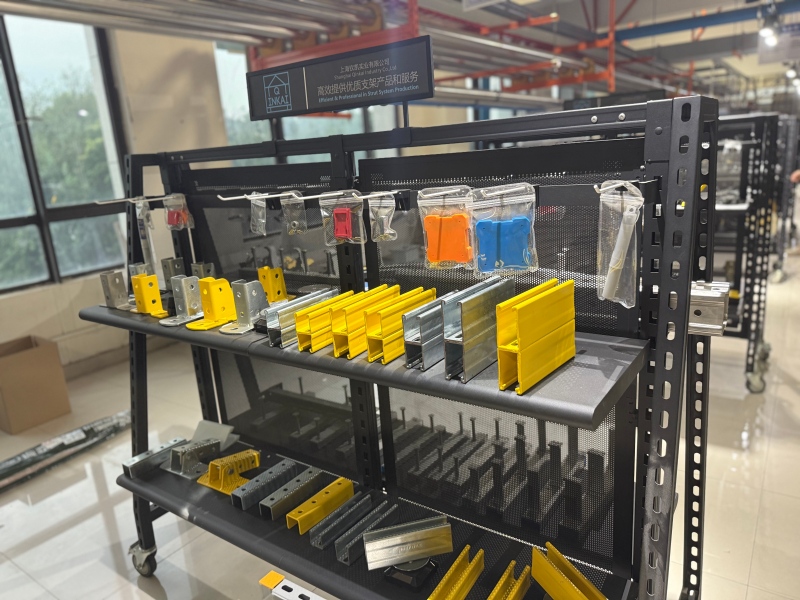
1. Manufacturing Process: Cold-Formed vs. Hot-Rolled
This is the fundamental distinction between the two profiles:
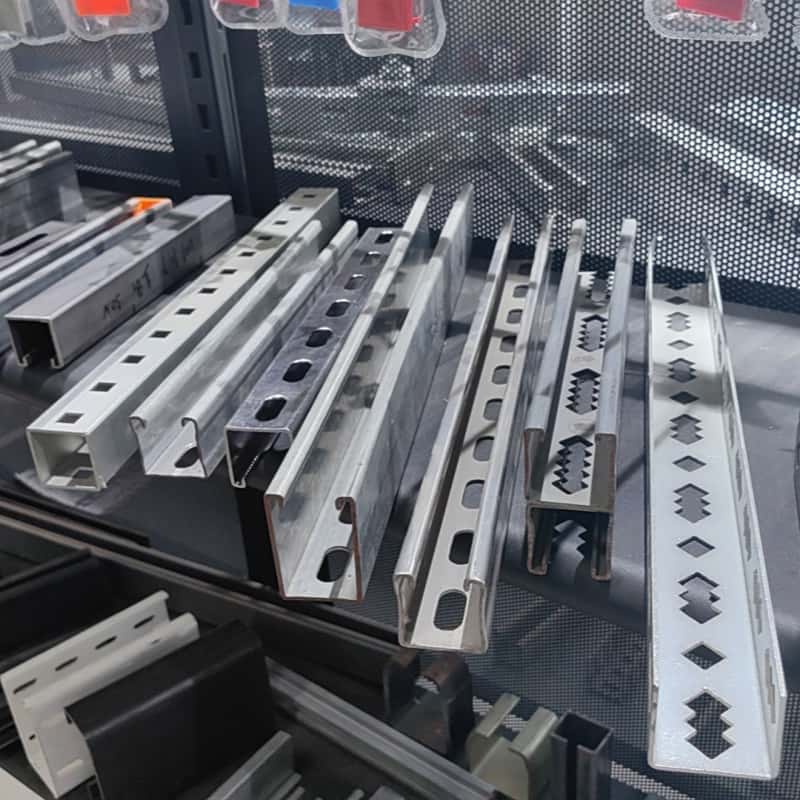
- C Purlin: Made using high-quality galvanized steel strips in a precision cold-forming procedure. They typically have thin walls (1.6mm to 3.2mm) and include “lips” to enhance structural rigidity while remaining lightweight.
- C Channel: Thermo-mechanically rolled structural steel. It has a wall thickness normally exceeding 5mm, making it a heavy-duty profile without lips. It is the primary material for “main framing” with significant industrial strength.
2. Load-Bearing Capacity and Span Performance
In the era of 2026 digital architectural design, load-bearing calculations have become more precise:
- C Purlin: Specifically designed for distributed loads. It is excellent for transferring roof and wall panel pressure to the main steel frame. However, under large point loads, its torsional stiffness is lower.
- C Channel: Provides greater capacity for longitudinal loads and flexural rigidity. It is often used as a beam or column for short-to-medium spans, capable of bearing larger gravity loads without local buckling.
3. 2026 Construction Application Mapping
| Application Scenario | Recommended Product | Reason |
|---|---|---|
| Large Logistics Warehouses | C Purlin | Lightweight design reduces total steel consumption; galvanized coating provides 20+ years of protection. |
| Multi-story Floor Supports | C Channel | Greater thickness provides robust vertical support for heavy flooring systems. |
| Solar PV Racking | C Purlin | Flexible processing; pre-punched holes significantly shorten on-site installation time. |
| Industrial Equipment Frames | C Channel | Stable structure with excellent welding performance and high vibration resistance. |
4. Cost and Construction Efficiency Analysis
Market data for 2026 shows that rising labor costs have made installation convenience a decisive factor.
- Installation Speed: C Purlins are usually pre-punched and assembled by bolts, making construction over 30% faster than C Channels, which often require heavy welding.
- Logistics Costs: Since C Purlins are only 1/3 to 1/2 the weight of C Channels, they provide a significant freight advantage in international trade, allowing clients to maximize container space.
For 2026 projects prioritizing speed and weight reduction (like solar farms and warehouses), the C Purlin is the superior choice. However, for heavy-duty industrial framing and multi-story supports, the traditional C Channel remains the industry standard for durability and strength.
Post time: May-27-2026