
April 8, 2026 – As global carbon neutrality and smart urbanization efforts accelerate, the cable tray industry is transforming, with sustainability and technological innovation as core growth drivers. Recent data shows the global market is projected to grow from $5.4 billion in 2025 to $5.73 billion in 2026 (6.1% YoY) and reach $7.18 billion by 2030 (5.8% CAGR). This growth is tied to rising demand for green building materials, data center expansion, and industrial electrical system upgrades.
As core supports for cable laying, cable trays ensure safe, orderly power and communication network operation. Unlike traditional “simple metal troughs”, modern trays have evolved into integrated solutions combining environmental protection, durability and intelligence to meet diverse application needs.
A key industry trend is the adoption of sustainable materials and green design. Manufacturers increasingly use low-carbon, recyclable materials: recycled aluminum, which uses 5% of primary aluminum’s energy and cuts CO₂ emissions by over 90% (95% recycling rate), is a top choice. For corrosive environments, bamboo fiber-reinforced PVC composites—made from renewable resources, using 30% less energy than fiberglass and free of formaldehyde—are growing in popularity.
Green coating technologies are also widely applied: solvent-based coatings are replaced by zero-VOC solvent-free powder and water-based options, which offer stronger adhesion and longer service life, reducing repainting waste. For closed-loop recycling, manufacturers use single-material designs and detachable connections, with surface material marking to boost recycling efficiency.
Technological upgrading, particularly modular and intelligent designs, drives growth. High-molecular cable trays (a key metal alternative) have made breakthroughs: substrate modification increases tensile/bending strength by over 30% (comparable to high-quality steel) while remaining one-third its density. High-temperature integrated molding eliminates splicing gaps, improving stability and boosting production efficiency by over 50%.
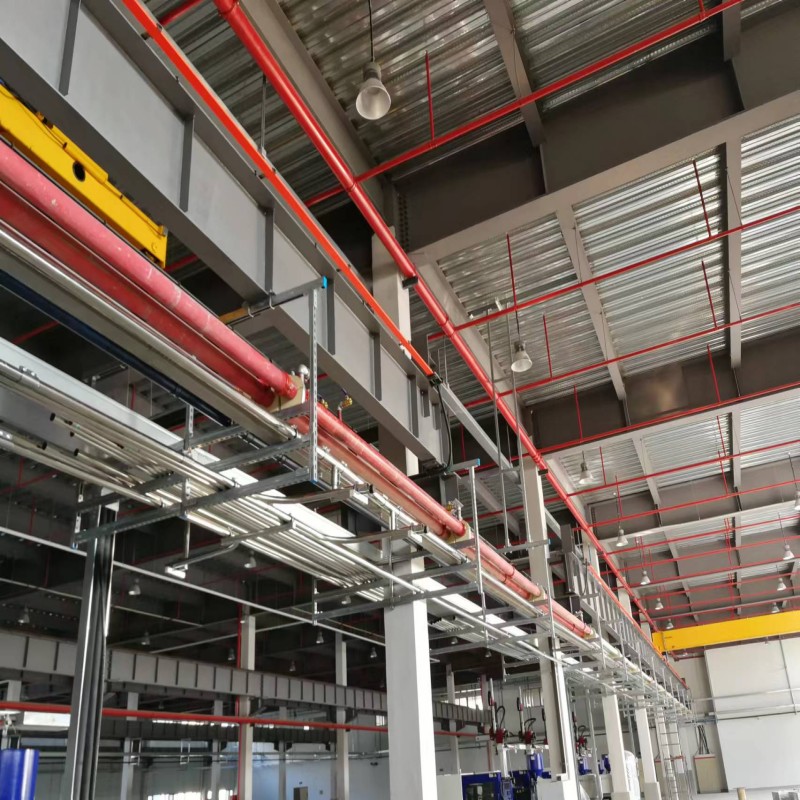
Intelligent upgrades enhance functionality. In data centers, trays integrate heat dissipation holes and sensor mounts for real-time temperature/stress monitoring, ensuring stable high-density cable operation. Modular quick-install designs cut installation time per meter from 30 to under 10 minutes, lowering labor costs. Leading firms like Panduit offer data center-specific wire basket systems to improve strength-to-weight ratio and cable capacity.
Construction sector expansion supports market growth. Eurostat data shows euro zone/EU construction output rose 3.0%/2.5% YoY in April 2025, driving demand in commercial/residential projects. Increased investment in renewable energy and smart buildings expands tray applications to chemical parks, underground corridors and smart cities.
Experts note the market is shifting from price to technology competition, with enterprises boosting R&D. Improved industry standards—with clear material, process and safety specs—ensure quality and a fair competitive environment for tech-advantaged firms.
Looking ahead, as 5G, IoT and green building technologies advance, the industry will further integrate sustainability and intelligence. Carbon footprint quantification and smart energy-saving trays will be key research directions, supporting low-carbon society construction and electrical infrastructure development.
Post time: May-06-2026