
In the current landscape of global industrial development, a quiet but profound shift is occurring in engineering philosophy. Procurement departments and lead engineers are moving away from “lowest initial bid” toward “asset longevity.” In environments such as chemical processing plants, desalination facilities, and offshore wind farms, the traditional dominance of SS316 stainless steel or hot-dip galvanized steel is being challenged by a high-performance alternative: the FRP cable tray (Fiberglass Reinforced Plastic). This transition is not driven by novelty, but by a cold, hard calculation of risk and the massive hidden costs associated with infrastructure failure.
The Invisible Tax of Corrosion
In coastal industrial zones or facilities with high concentrations of acidic vapors, metal is under constant attack. Even the highest grades of stainless steel eventually face pitting or stress-corrosion cracking when exposed to chlorides. When a metallic cable support fails, the cost is rarely limited to the price of the metal; it is measured in the thousands of dollars lost during every hour of an unscheduled power shutdown required for repairs.
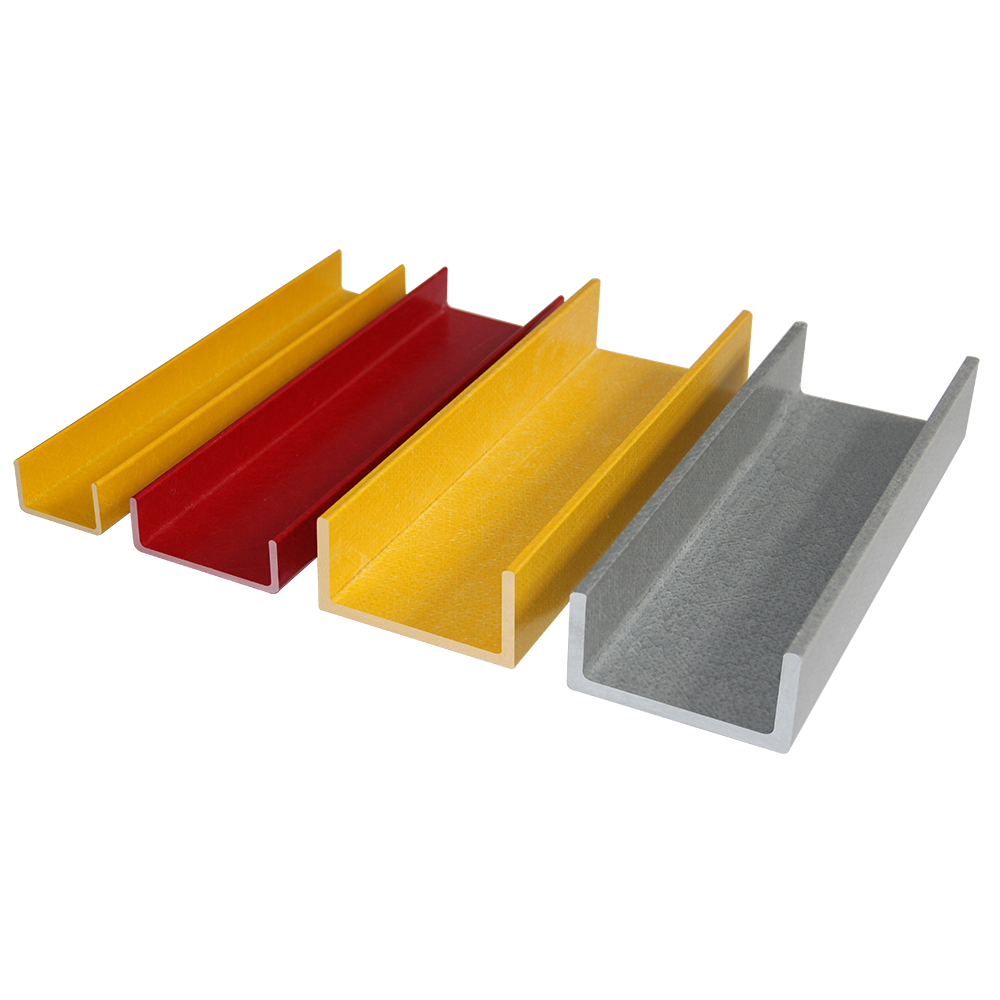
This is where the fiberglass cable tray fundamentally changes the equation. Unlike metals, which rely on surface coatings or passive layers that can be scratched or compromised, FRP is chemically inert throughout its entire structure. Manufactured via the pultrusion process—where high-strength glass fibers are pulled through a bath of thermosetting resin (typically high-grade Vinyl Ester)—the tray is effectively “immune” to the electrochemical reactions that cause rust. For a facility manager, this translates to an “install and forget” asset that remains structurally sound for 30 to 50 years without a single coat of anti-corrosive paint.
Simplifying the Safety Architecture
From a purely electrical standpoint, the switch to an FRP cable tray simplifies the system architecture significantly. Metal trays are conductors, meaning they require a meticulous network of grounding, bonding, and equipotential connections to prevent shocks or sparks during a cable fault. Every joint must be bridged, and every section must be tested for continuity.
FRP, by its very nature, is a high-performance insulator. This inherent non-conductivity adds a vital layer of “passive safety” to the site. It eliminates the risk of “touch voltage” accidents and prevents the propagation of ground faults through the support structure. In explosive environments or high-voltage substations, this dielectric strength is a life-saving feature. Furthermore, because FRP is non-magnetic, it does not suffer from the eddy current heating that can occur in metallic trays carrying high-amperage AC loads, ensuring that cables operate at their peak designed efficiency.
The Logistical “Speed-Booster” for Contractors
On a busy construction site, weight is a critical factor in project timelines. An FRP cable tray weighs approximately 25% of its steel equivalent. For contractors, this light weight reduces the need for heavy lifting equipment or specialized cranes during elevated installations. Two workers can easily maneuver and position long spans of FRP tray that would otherwise require a mechanical hoist if made of steel.
Perhaps the most underrated advantage is the ease of on-site modification. In modern plants, where existing piping often forces last-minute changes to cable routes, the ability to cut and drill the tray is essential. Cutting a metal tray creates sparks, which requires a “Hot Work Permit”—a bureaucratic and time-consuming process in oil and gas or chemical sites. Cutting a fiberglass cable tray produces no sparks, allowing work to continue without interruption. When combined with modular splice plates and quick-connect fittings, these labor savings often reduce total installation time by 15% to 20%.
Material Engineering for Global Extremes
It is important to recognize that not all composite trays are created equal. High-spec systems—such as those engineered by Qinkai—incorporate specialized UV inhibitors to prevent “fiber blooming” (the degradation of resin due to sunlight exposure). In the intense heat of the Middle East or the high-UV environments of the Australian outback, these additives ensure the tray maintains its structural modulus for decades.
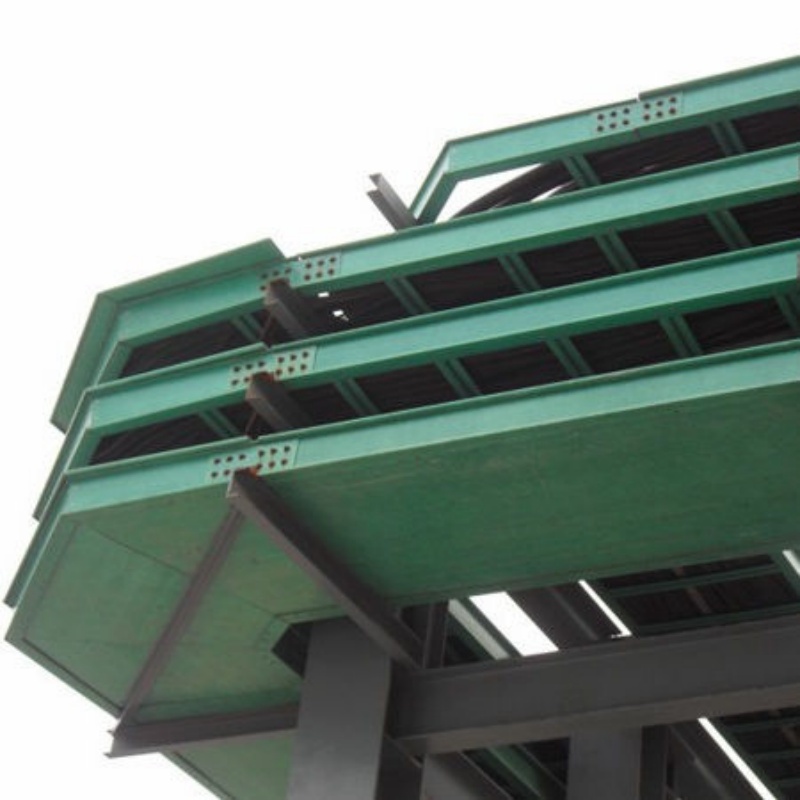
Moreover, the versatility of the resin matrix allows for specific tailoring. In sites where fire safety is the absolute priority, fire-retardant resins can be used to meet the most stringent ASTM E84 smoke and flame spread ratings. These pultruded profiles also offer remarkable strength; a NEMA 20C rated FRP ladder can support significant cable loads over spans as wide as 6 meters, reducing the number of costly vertical support pillars needed throughout the facility.
Conclusion: The Business Case for the Long Game
If one looks only at the line item on a procurement order, FRP might appear more expensive than galvanized steel. However, when viewed through the lens of “Total Cost of Ownership” (TCO), the narrative flips. When you aggregate the lower shipping costs (due to weight), the reduced labor hours for installation, the elimination of grounding hardware, and—most importantly—the zero maintenance requirement over a 40-year period, FRP is consistently the most economical choice.
As global infrastructure becomes more complex and the cost of downtime continues to skyrocket, the FRP cable tray has moved from a “niche material” to a “strategic standard.” For suppliers like Sunnie, providing these systems is more than a sale; it is about providing a resilient foundation for the world’s most critical industrial assets. In the battle against time and the elements, the future of the industrial world is undeniably composite.
Post time: May-26-2026