
I. Introduction: Cable Trays – The Core Support of Modern Wiring Systems
With the global development of industrial intelligence and large-scale data centers, the safety, orderliness, and maintenance efficiency of cable installation have become core demands for overseas engineering projects. As a key device for supporting, protecting, and managing cables, cable trays are widely used in data centers, industrial plants, municipal infrastructure, and other fields.
In data centers, cable trays guide data cables in an orderly manner to ensure stable transmission; in industrial plants, they realize standardized management of power and signal transmission; in municipal infrastructure, they undertake the supporting tasks of various pipelines and are the “neural network” of modern wiring systems.
Combining international project practices and technical standards, this article provides professional and practical application solutions for foreign trade customers from the perspectives of type selection, material innovation, and installation specifications, helping overseas projects reduce costs and improve efficiency.
II. Core Types of Cable Trays and International Benchmark Application Cases
2.1 Slot-Type Cable Trays: The Preferred Solution for Data Center Cable Management
Slot-type cable trays feature a fully enclosed structure, which effectively prevents dust, interference, and cable damage. They are the ideal choice for high-density data centers, and their high-strength plates can stably bear vertical loads.
Data centers of international giants such as Google and Amazon AWS all use slot-type trays to achieve layered and regular arrangement of data cables, reducing cross-interference. Applications in Alibaba and Tencent Cloud data centers have further verified that this type of tray can improve fault detection efficiency and ensure the stability and reliability of data transmission.
2.2 Ladder-Type Cable Trays: The Efficient Heat Dissipation Choice for Industrial Scenarios
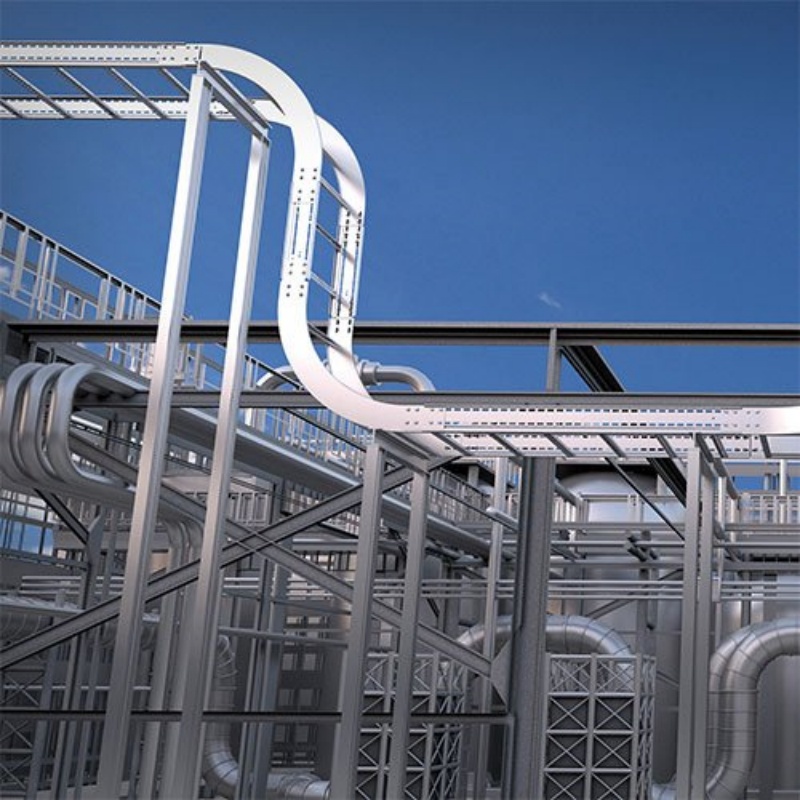
Ladder-type cable trays consist of side plates and rungs to form an open trapezoidal structure, which has the advantages of strong load-bearing capacity, good heat dissipation, and easy installation. They are suitable for large-diameter power cable installation scenarios such as industrial automation and commercial buildings.
Their modular design can flexibly adapt to different environments and load requirements. The open structure can quickly dissipate heat generated by cable operation, extend cable service life, and facilitate later inspection and maintenance, reducing operation and maintenance costs.
This type of tray is widely used in overseas manufacturing plants, such as automobile manufacturing and electronic manufacturing factories, which can stably support a large number of power and control cables and ensure the efficient operation of production lines.
III. Material Innovation: The Upgrade Path from Traditional Metal to Polymer Cable Trays
3.1 Limitations of Traditional Metal Cable Trays
Although traditional steel cable trays are treated with galvanizing and painting, they are prone to rust and deformation within 1-3 years in highly corrosive environments such as coastal salt spray and chemical parks. FRP (Fiber Reinforced Plastic) cable trays have limited corrosion resistance and are prone to embrittlement and cracking after long-term exposure to sunlight. Frequent replacement will increase the total lifecycle cost of the project.
3.2 Core Advantages of Polymer Material Cable Trays
Polymer composite cable trays adopt modified base materials and anti-corrosion, anti-aging formulas to achieve “active anti-corrosion”. They can resist the erosion of strong acids and alkalis without additional coatings and tolerate extreme temperatures of -40℃~80℃.
Their service life can reach 20-30 years, which is 2-3 times that of traditional metal cable trays. Moreover, their density is only 1/4 of that of steel, which can be installed by a single person, reducing transportation and labor costs by 60%.
In line with the low-carbon needs of overseas green buildings, their proportion in overseas orders in fields such as chemical industry and new energy continues to increase, adapting to various harsh environment projects.
IV. Professional Installation and Grounding Specifications: Ensuring Compliant Operation of Overseas Projects
4.1 Key Requirements for Cable Tray Installation
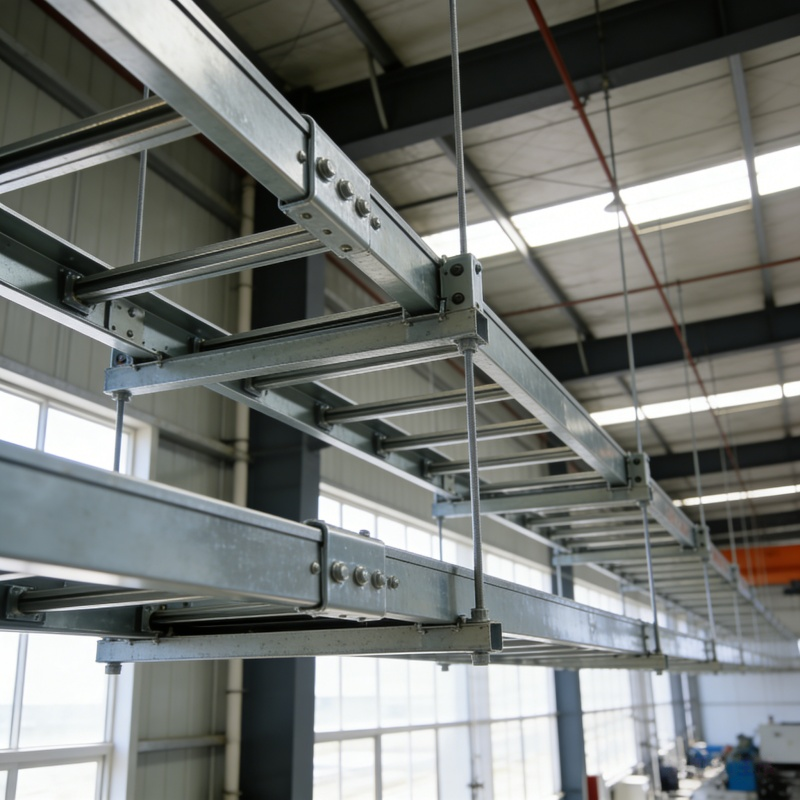
The installation shall follow the principle of “along the cable route, fewer turns”. The distance between adjacent horizontal installations shall not exceed 1.5 meters, and the vertical installation shall not exceed 3 meters. The brackets shall be firmly fixed and coordinated with fire pipes, drainage pipes and other facilities.
The installation of multi-layer cable trays shall follow the principle of “from top to bottom”, with a margin of not less than 150mm reserved between layers, taking into account the current installation and later expansion and maintenance needs, especially suitable for scenarios with large cable increments such as data centers.
4.2 Core Standards for Grounding Construction
Grounding is the key to the safe operation of cable trays, which must strictly follow international standards to adapt to the electrical safety requirements of overseas markets such as Europe and the United States.
Galvanized cable trays can be bridged through galvanized connecting plates, and spring washers shall be added at the bolts to prevent loosening. For painted/sprayed cable trays, soft copper wires shall be used for bridging, the insulating coating at the contact points shall be removed, and conductive paste shall be applied.
When the cable tray is used as a grounding main line, the joint connection resistance shall not be greater than 0.00033Ω, and the whole line shall be reliably connected to the grounding main line at least 2 points. When crossing building expansion joints, soft copper wires shall be used to reserve expansion margins to ensure grounding continuity.
V. Practical Guide for Cable Tray Selection in Overseas Projects: Matching on Demand to Reduce Costs and Improve Efficiency
5.1 Scenario-Based Selection Strategy
For data centers and precision computer rooms, slot-type polymer cable trays are preferred, which take into account anti-interference and anti-corrosion needs and ensure stable data transmission. For industrial plants and outdoor infrastructure, ladder-type metal or polymer cable trays can be selected to balance heat dissipation and durability.
For projects in harsh environments such as coastal areas and chemical parks, polymer cable trays are the first choice. Their excellent anti-corrosion performance can resist natural and chemical erosion, greatly reducing maintenance costs, and adapting to scenarios such as wind farms and chemical parks.
5.2 Suggestions on Customized Services for Foreign Trade Customers
Foreign trade operators need to deeply understand the customer’s project parameters, including cable load, installation environment, and local standards, to ensure that the solution meets the project needs and acceptance specifications.
For non-standard size requirements, connect with manufacturers in advance for prefabricated production; provide supporting multi-language installation manuals, clarify installation steps and maintenance methods, and avoid installation errors caused by language barriers.
Provide local after-sales technical support, set up after-sales points or provide remote guidance, respond to customer needs in a timely manner, and improve customer satisfaction and the international competitiveness of products.
VI. Conclusion: The Future Trend of Cable Trays Empowering Overseas Infrastructure
The selection and application of cable trays directly affect the operation efficiency and cost control of overseas projects. With the upgrading of polymer materials and the popularization of modular design, long-term stable, economical and environmentally friendly cable trays will become the mainstream of overseas infrastructure. Foreign trade enterprises need to focus on customer needs and help global projects achieve efficient and safe wiring with professional solutions and services.
→ For all products,services and up to date information,please contact us.
Post time: Feb-06-2026