
The global aluminum track industry is undergoing a profound structural transformation in 2026, driven by booming downstream demand across industrial automation, renewable energy infrastructure, green construction, and new energy transportation sectors. As a core extruded aluminum component with lightweight, high-strength, corrosion-resistant, and easy-installation characteristics, aluminum track products including linear guide tracks, solar mounting rails, construction sliding tracks, and industrial assembly tracks have become indispensable foundational materials for global high-end manufacturing and low-carbon infrastructure construction. Recent overseas market data, industrial investment dynamics, and regional policy adjustments collectively indicate that the aluminum track market is shifting from traditional extensive growth to high-quality, sustainable, and intelligent development, with distinct regional differentiation and technological iteration trends emerging across North America, Europe, Southeast Asia, and Oceania.
According to the latest industry analysis from IndexBox and PW Consulting, the global aluminum linear track and mounting rail market maintained a steady compound annual growth rate of 6.85% from 2025 to 2032, with the overall market size reaching USD 1.16 billion in 2025 and projected to hit USD 1.84 billion by 2032. Notably, the solar photovoltaic (PV) aluminum track segment presents the most explosive growth momentum, registering a 5.8% CAGR and expected to double its market scale by 2035, supported by the global rollout of over 500 GW of utility-scale solar installation projects. This robust growth trajectory reflects the rising overseas recognition of aluminum track’s structural advantages and environmental value, as global industries accelerate the replacement of traditional steel tracks with lightweight aluminum solutions.
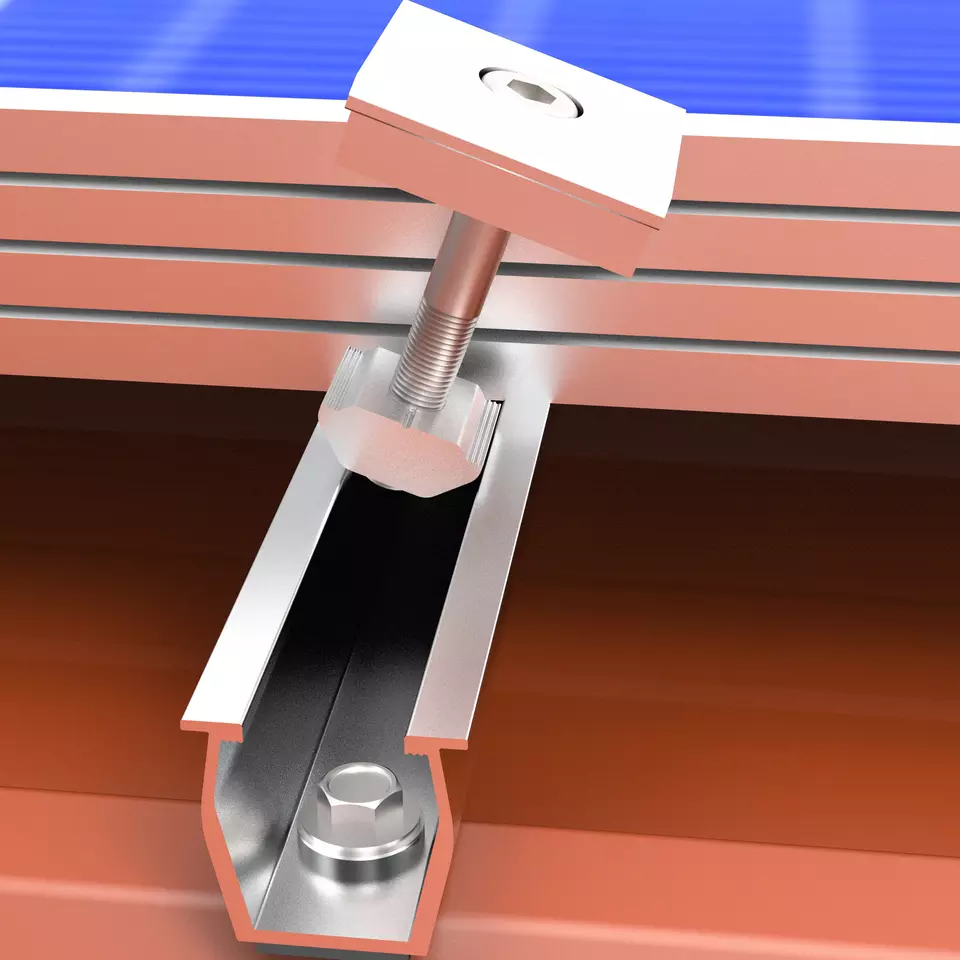
One of the most prominent overseas trends in 2026 is the deep integration of aluminum track systems with renewable energy infrastructure, especially the rapid penetration of aluminum mounting tracks in European and North American solar PV markets. European countries, led by Germany, France, and the Netherlands, have intensified their clean energy transformation targets under the EU Green Deal, driving surging demand for high-precision, weather-resistant aluminum solar tracks. Unlike traditional carbon steel brackets, aluminum track systems adopting the mature Al6005-T5 alloy standard feature ultra-high corrosion resistance and structural stability, adapting to extreme outdoor environments such as coastal humidity and high-altitude ultraviolet radiation. More importantly, optimized modular aluminum track designs with snap-in sliding nut structures have reduced on-site installation labor time by nearly 40%, effectively addressing the persistent labor shortage plaguing the European commercial and industrial rooftop PV construction industry.
In North America, the aluminum track market is dominated by standardized production and localized supply chain restructuring. The United States’ Inflation Reduction Act (IRA) has introduced substantial tax incentives and subsidy policies for domestic renewable energy and advanced manufacturing, prompting local manufacturers to accelerate capacity expansion and certification upgrades. In 2026, leading North American aluminum track suppliers have fully popularized UL 2703 certified solar track systems, ensuring compliance with strict regional structural safety and fire protection standards. APA Solar Solutions, a key local player, officially launched its new production base in Bryan, Ohio, focusing on the R&D and manufacturing of high-standard TITAN and Ready Rack aluminum track mounting systems, greatly improving the localized supply capacity of high-end aluminum track products in the North American market. Meanwhile, the U.S. industrial automation sector’s upgrading wave has driven strong demand for precision linear aluminum tracks, which are widely applied in intelligent production lines, robotic sliding systems, and automated logistics equipment, pushing the iteration of high-precision, low-friction aluminum track processing technologies.
The European aluminum track market is further characterized by its strict emphasis on circular economy and green production standards. In response to the EU’s carbon border adjustment mechanism (CBAM) and increasingly stringent environmental regulations, overseas aluminum track manufacturers have comprehensively promoted the application of recycled aluminum materials and low-carbon production processes. In 2025–2026, major European aluminum component enterprises increased investment in secondary aluminum recycling production lines, with the recycled aluminum proportion in new aluminum track products rising to over 35% on average. Different from primary aluminum production relying on high energy consumption, recycled aluminum track manufacturing reduces carbon emissions by more than 90%, perfectly matching the ESG development goals of European construction and new energy enterprises. Additionally, European countries have accelerated the standardization of aluminum track building applications, with unified industry specifications issued for sliding door tracks, curtain wall support tracks, and industrial assembly tracks, effectively standardizing the market and eliminating low-quality, high-carbon products.
Southeast Asia and Oceania have emerged as new growth poles of the global aluminum track market in 2026, benefiting from rapid infrastructure construction and renewable energy layout. Countries such as Vietnam, Thailand, and Australia are vigorously promoting photovoltaic power station construction and industrial park upgrading, driving continuous growth in demand for cost-effective and high-adaptability aluminum track products. Unlike the high-standard customized products in Europe and America, the Southeast Asian market favors universal, modular aluminum track solutions that balance performance and cost. Local distributors and project contractors prefer integrated track kits with complete accessories and pre-processed structures to improve construction efficiency and reduce engineering costs. Australia, in particular, has seen booming demand for aluminum tracks in large-scale ground solar projects, as its vast land resources and abundant solar energy resources drive the continuous expansion of utility-scale PV installations, creating long-term stable demand for corrosion-resistant aluminum track systems suitable for desert and coastal environments.
Intelligent manufacturing and technological iteration constitute another core trend of the global aluminum track industry in 2026. Overseas leading manufacturers have widely adopted digital twin technology, AI precision design, and fully automated production lines to optimize aluminum track structural parameters and processing accuracy. Traditional aluminum track production relied on manual experience for parameter setting, leading to inconsistent product precision and low production efficiency. At present, European and American advanced factories use AI algorithms to simulate project application scenarios, dynamically adjusting track cross-section structure, wall thickness, and groove specifications to achieve personalized customization for different scenarios such as solar tracking systems, automated production lines, and building sliding structures. Meanwhile, predictive maintenance technology based on big data is applied to track production equipment, effectively reducing production failure rates and improving product yield and production consistency. The popularization of intelligent manufacturing has significantly narrowed the performance gap between different batches of aluminum track products, laying a foundation for the large-scale promotion of standardized aluminum track systems globally.
The global aluminum track supply chain pattern is also undergoing significant regional restructuring in 2026. Affected by geopolitical factors, regional trade tariff policies, and energy cost differences, the global aluminum track industry is shifting from a single centralized supply model to a diversified and localized supply layout. European and American markets are accelerating the localization of aluminum track production capacity to reduce reliance on cross-border imports and ensure supply chain stability. At the same time, emerging markets in Southeast Asia, Latin America, and the Middle East are continuously introducing foreign advanced production technologies and equipment to cultivate local aluminum track manufacturing capacity. Emirates Global Aluminium (EGA), a leading Middle Eastern aluminum enterprise, expanded its recycled aluminum production capacity in 2026, actively laying out low-carbon aluminum track product lines to meet the growing demand for green aluminum components in the Middle Eastern new energy and construction markets.
Despite the optimistic growth prospects, the global aluminum track industry still faces prominent challenges. First, raw material price volatility caused by global aluminum supply chain tensions continues to affect enterprise profit margins. The export control policy of bauxite in Guinea and the uneven distribution of global renewable energy resources lead to unstable primary aluminum prices, bringing cost pressure to aluminum track manufacturers. Second, the industry has obvious regional technical barriers and standard differences. Europe’s CE certification, North America’s UL certification, and emerging markets’ local industry standards increase the R&D and certification costs of global enterprises’ cross-border layout. Third, the rapid expansion of market demand has led to a shortage of high-end technical talents and professional construction teams in some regions, restricting the large-scale promotion of high-precision and intelligent aluminum track systems.
Looking ahead to 2027–2030, the global aluminum track market will maintain sustained and steady growth, with green low-carbonization, intelligent customization, and regional localized supply becoming the three core development directions. With the continuous advancement of global dual-carbon goals and the accelerated popularization of intelligent manufacturing and renewable energy equipment, the application scenarios of aluminum track products will be further expanded, covering emerging fields such as new energy vehicle slide rails, energy storage equipment support tracks, and intelligent building automation systems. Overseas leading enterprises will continue to increase investment in low-carbon material research and intelligent technology innovation, while industry standardization construction will be further improved. The global aluminum track industry will gradually get rid of low-price homogeneous competition and move toward high-value, high-quality, and sustainable differentiated development, opening up broader market development space.
Post time: Aug-28-2026